This week, the Global Sustainable Island Summit 2026, celebrated in Gran Canaria, brings together leaders, researchers, and innovators committed to advancing sustainability across island territories worldwide.
Among the featured contributors, Juan Luis Gómez Pinchetti, from the Spanish Bank of Algae (BEA) of the Universidad de Las Palmas de Gran Canaria, partners at EMBRC-ERIC and MARINNONET Project (Interreg Atlantic Area), is actively participating in discussions focused on the role of marine biotechnology in building more resilient and sustainable island ecosystems. His work highlights the strategic importance of algae as a key resource for sectors such as food, energy, and environmental management, reinforcing the Canary Islands’ position as a hub for blue economy innovation.
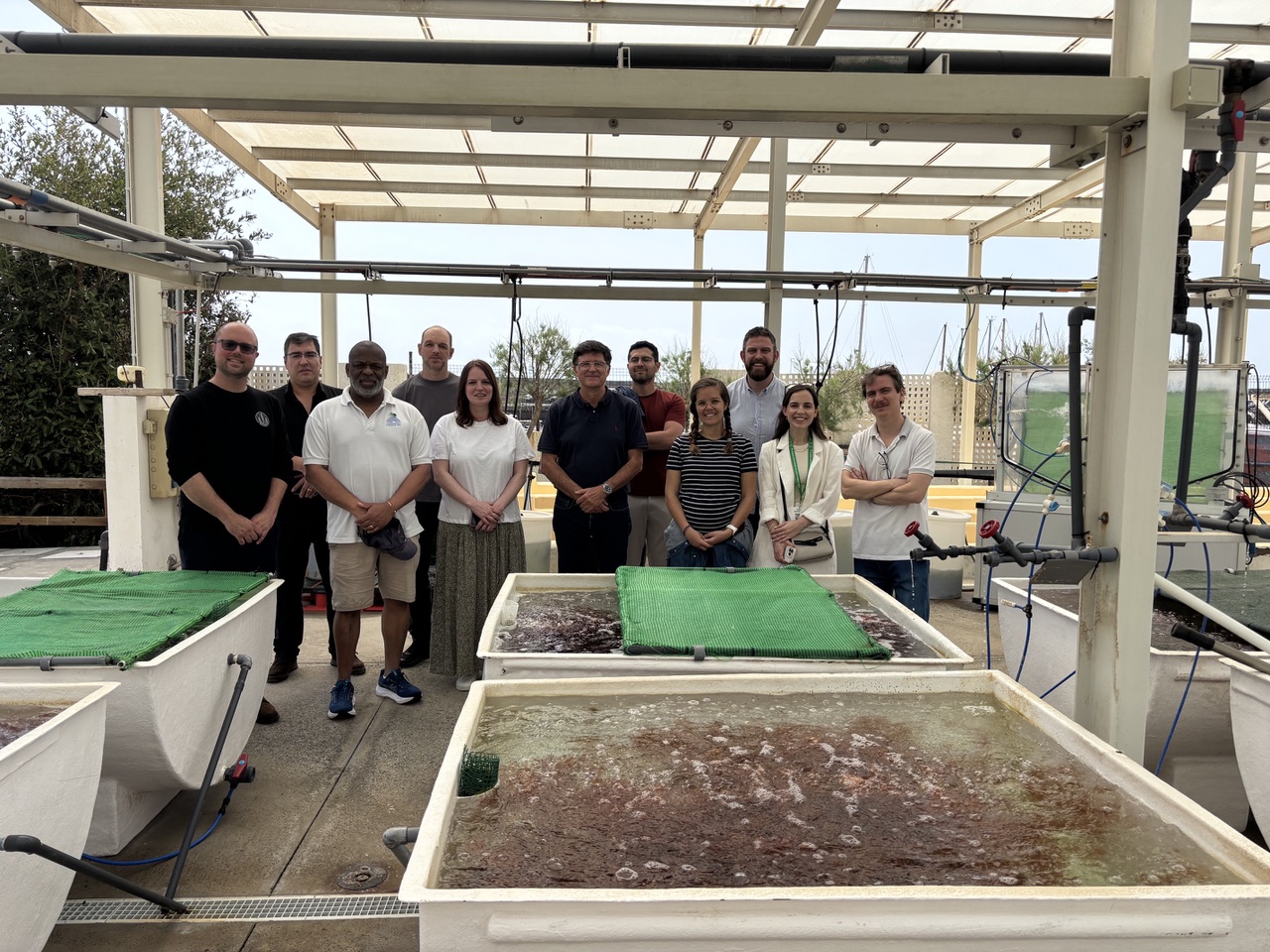
As part of the summit’s programme, attendees with a special interest in applied research and biotechnology had the opportunity yesterday to visit the Spanish Bank of Algae facilities. This visit offered a first-hand look at one of Europe’s leading infrastructures dedicated to the conservation, research, and industrial application of macro- and microalgae.
Participants explored ongoing projects, such as the pilot projects coming out from MARINNONET (ULVACEL and POLYMEX), CALYPSO from the Interreg MAC 2024-2027, ALGASAL+ from the Fundación Biodiversidad or XTREMOLIFE from the Horizon Europe, cutting-edge laboratories, and collaborative initiatives that connect science with industry, showcasing how research institutions can drive sustainable development and economic diversification in island regions.
The visit not only strengthened knowledge exchange among international stakeholders but also highlighted the critical role of scientific infrastructures like BEA in addressing global challenges through local innovation.