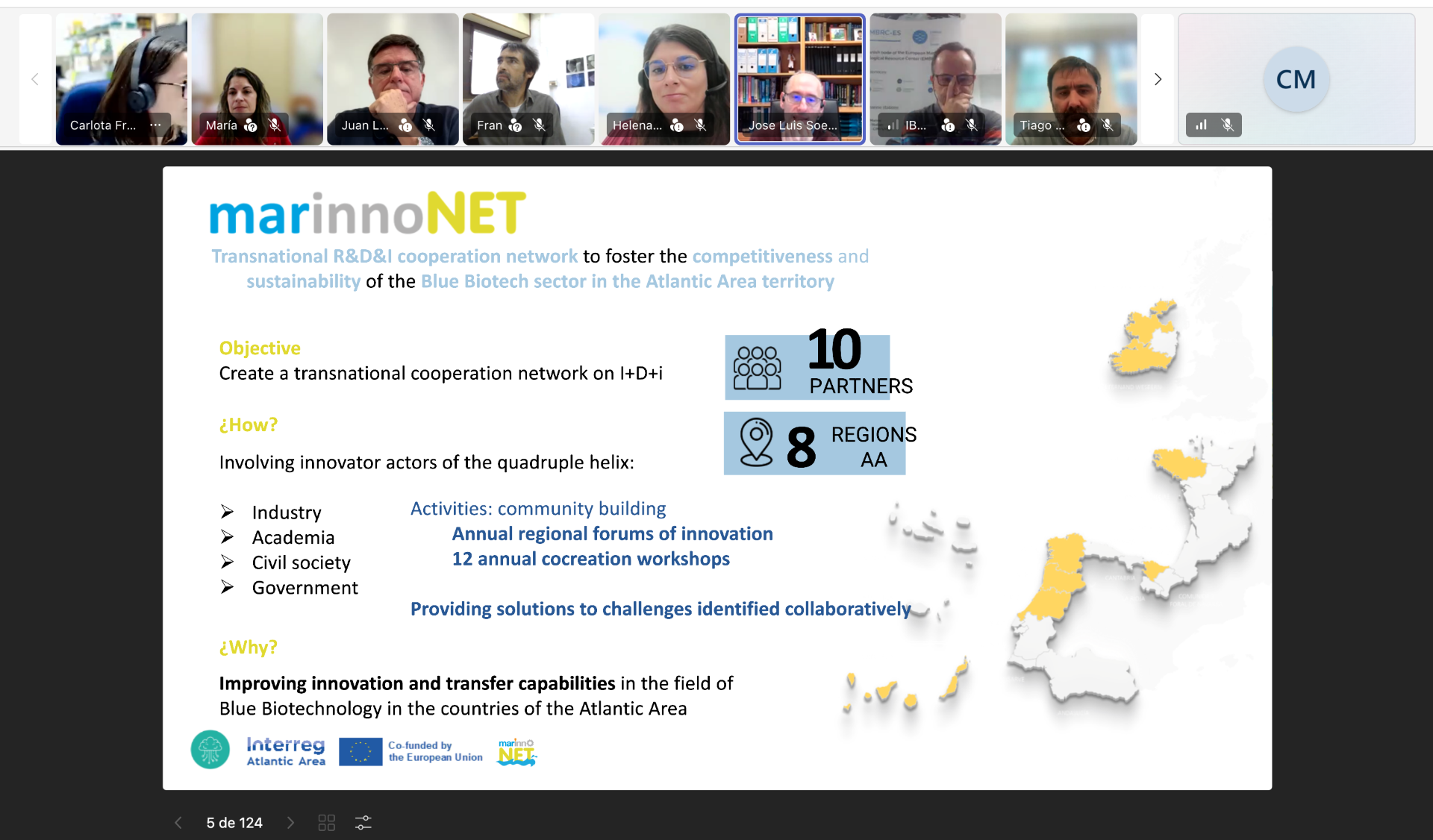
After three years of cooperation, the project has connected science and industry across four Atlantic countries, identified over 150 challenges facing the sector and promoted innovative solutions with commercial potential
Three years of collaboration, 16 R&D&I pilot projects and a European network connecting research, businesses and innovation across the Atlantic Area. As MARINNONET comes to an end, its achievements are helping to strengthen the blue biotechnology sector and opening up new opportunities for cooperation between Atlantic regions.
Developed under the Interreg Atlantic Area programme and led by the Marine Research Centre (CIM) at the University of Vigo, MARINNONET has worked to transform the potential of marine resources into new scientific, technological and business opportunities. The project’s aim has been to foster innovation and knowledge transfer through a transnational network connecting universities, research centres, businesses, public authorities and civil society across Spain, France, Portugal and Ireland. This cooperation model is based on open innovation and the development of solutions that respond to the sector’s real needs.
16 pilot projects turning research into new applications
One of the project’s main achievements has been supporting 16 innovation pilot projects, selected through two transregional calls. With funding of up to €30,000 per project, these initiatives have brought together research organisations and businesses from different Atlantic regions to develop and validate technologies and products with commercial potential.
The projects have focused on three main areas of blue biotechnology:
- Sustainable and resilient aquaculture: six initiatives addressing aquaculture feed, seaweed cultivation, animal welfare and the use of marine resources.
- Omics technologies and biodiversity monitoring: two projects focused on developing new tools for ecosystem monitoring.
- Marine products for industrial applications: eight initiatives focused on biomaterials, marine collagen, bioactive compounds and ingredients for sectors such as food and cosmetics.
Over 150 challenges identified
Innovation begins when scientific knowledge meets the real needs of the sector. This principle has guided much of MARINNONET’s work over the past three years. Through open innovation and co-creation workshops held across different Atlantic regions, the project has identified over 150 challenges and opportunities related to blue biotechnology.
This process has made it possible to engage with businesses and other stakeholders in the innovation ecosystem, understand their needs and incorporate them into the identification of new research and technology transfer opportunities. Beyond individual projects, MARINNONET has established a transnational network that facilitates the exchange of knowledge, expertise and resources between research organisations, businesses and innovation stakeholders across the four participating countries.
A cooperation model recognised across Europe
In recognition of its open innovation approach and collaboration between science, industry and society, MARINNONET received one of the Atlantic Project Awards 2025, presented during the Atlantic Stakeholder Platform Conference in Galway, Ireland. The project was recognised in the Healthy Oceans and Resilient Coasts category, corresponding to Pillar IV of the Atlantic Action Plan 2.0. The award particularly acknowledged its participatory model, the development of transnational pilot projects and its potential for replication in other European regions.
MARINNONET was also selected as Success Story #1 by the Atlantic Strategy platform, which highlighted the project’s contribution to innovation and technology transfer in the blue biotechnology sector.
A cooperation network with a long-term vision
MARINNONET has brought together 10 partner organisations from eight Atlantic regions across Spain, Portugal, France and Ireland, combining scientific, technological and innovation expertise. Led by the Marine Research Centre (CIM) at the University of Vigo, the consortium includes the University of Las Palmas de Gran Canaria, the University of the Basque Country, the Spanish Institute of Oceanography (IEO-CSIC), the University of Galway, the University of Minho, Sorbonne University, Munster Technological University, Pôle Mer Bretagne Atlantique and BlueBio Alliance.
With a budget of €2.32 million, 75% co-funded by the European Regional Development Fund (ERDF) through the Interreg Atlantic Area 2021–2027 programme, the project has worked to strengthen the innovation capacity of the blue biotechnology sector across the Atlantic Area.
The project is coming to an end, but the connections established, knowledge shared and opportunities identified provide a foundation for continued cooperation between research and industry. This is one of MARINNONET’s key legacies: a network of expertise and relationships with the potential to continue generating opportunities for blue biotechnology beyond the project’s lifetime.