The project presented the achievements of its transnational network and organised a roundtable to explore how the Atlantic’s scientific, technological and biological potential can be transformed into innovation with impact
MARINNONET took part in BIOSPAIN 2026 with two complementary activities that provided an opportunity to share the results of three years of work while opening the debate on the next challenges facing blue biotechnology. A presentation of the project’s main achievements and a roundtable proposed by the consortium itself showcased both the progress already made and the opportunities emerging for a sector that is gaining an increasingly prominent presence at major international biotechnology events.
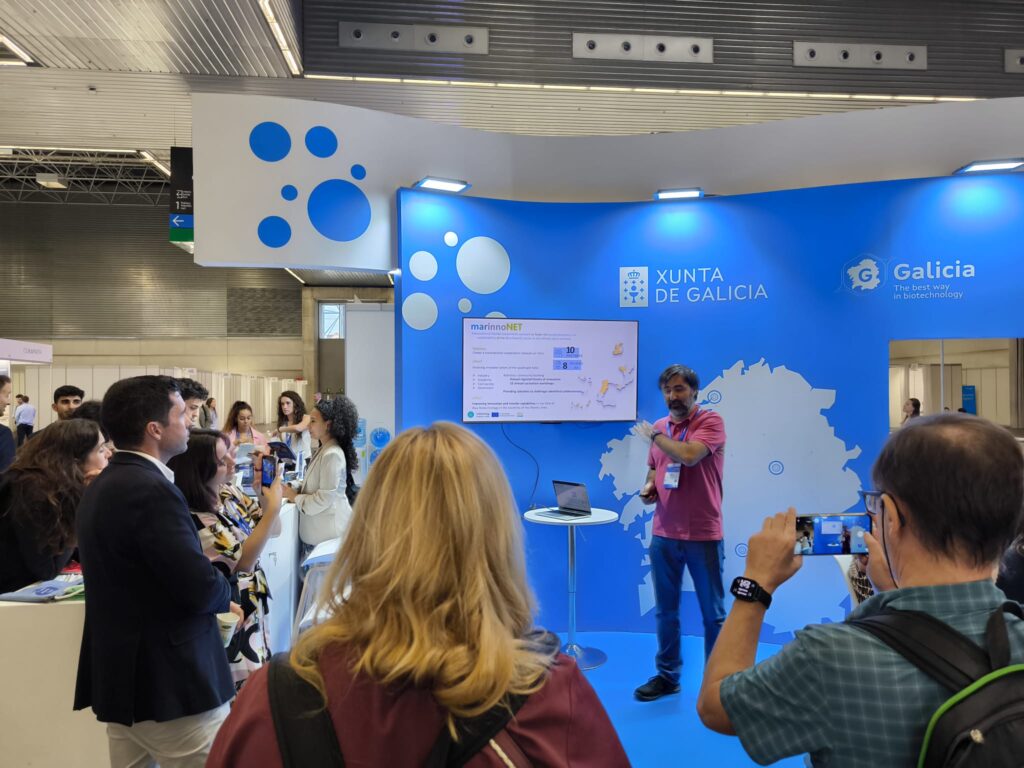
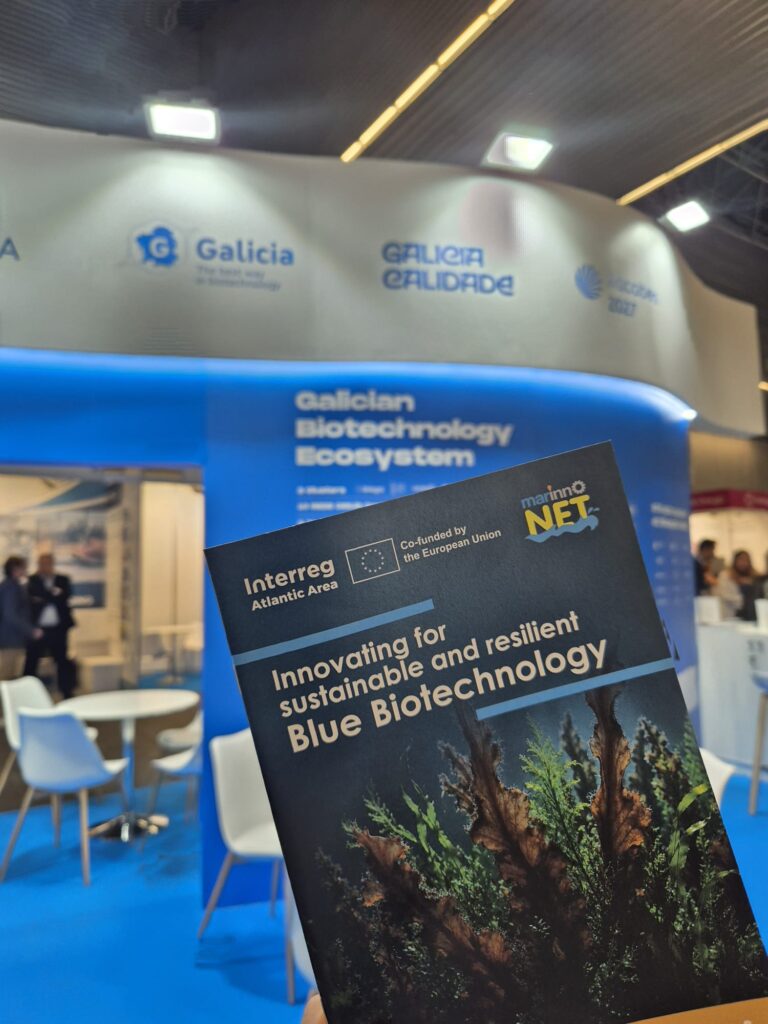
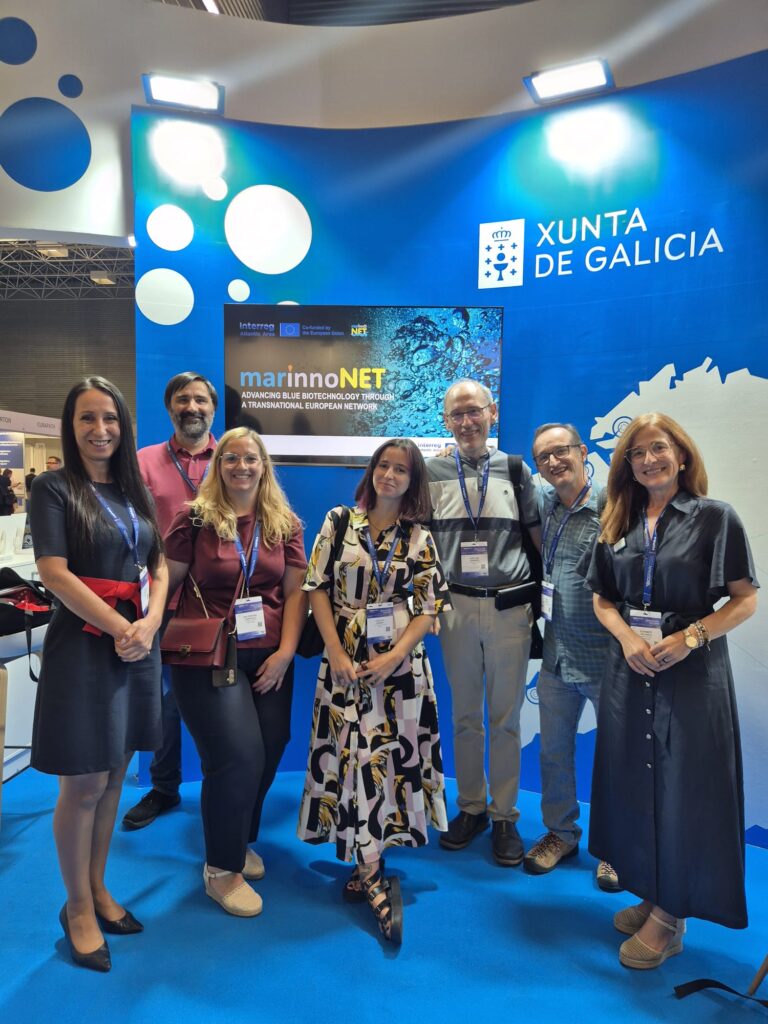
The first event took place at the Galicia Biotechnology stand, where MARINNONET presented the main results and achievements of its three years of activity. Under the title MARINNONET: Driving Blue Biotechnology through a Transnational European Network, the presentation showed how cooperation between partners from Spain, France, Ireland and Portugal has helped connect capabilities and strengthen research, knowledge transfer and innovation in blue biotechnology across the Atlantic Area.
The event also provided an opportunity to highlight the strength of the Galician biotechnology ecosystem of which MARINNONET is part through the Universidade de Vigo and the Centro de Investigación Mariña, as well as to strengthen ties with associated partners such as ANFACO-CYTMA.
The project was also present at the PiE-EHU stand, a consortium partner, providing another space to showcase the network, its results and the capabilities of its members to companies, research centres and other stakeholders attending BIOSPAIN.
From results to the next challenges
MARINNONET’s second major event at BIOSPAIN shifted the conversation from what has been achieved over the past three years to one of the challenges that has shaped the project from the outset: how to move the scientific and technological potential of marine biotechnology from research towards applications that generate an impact on society.
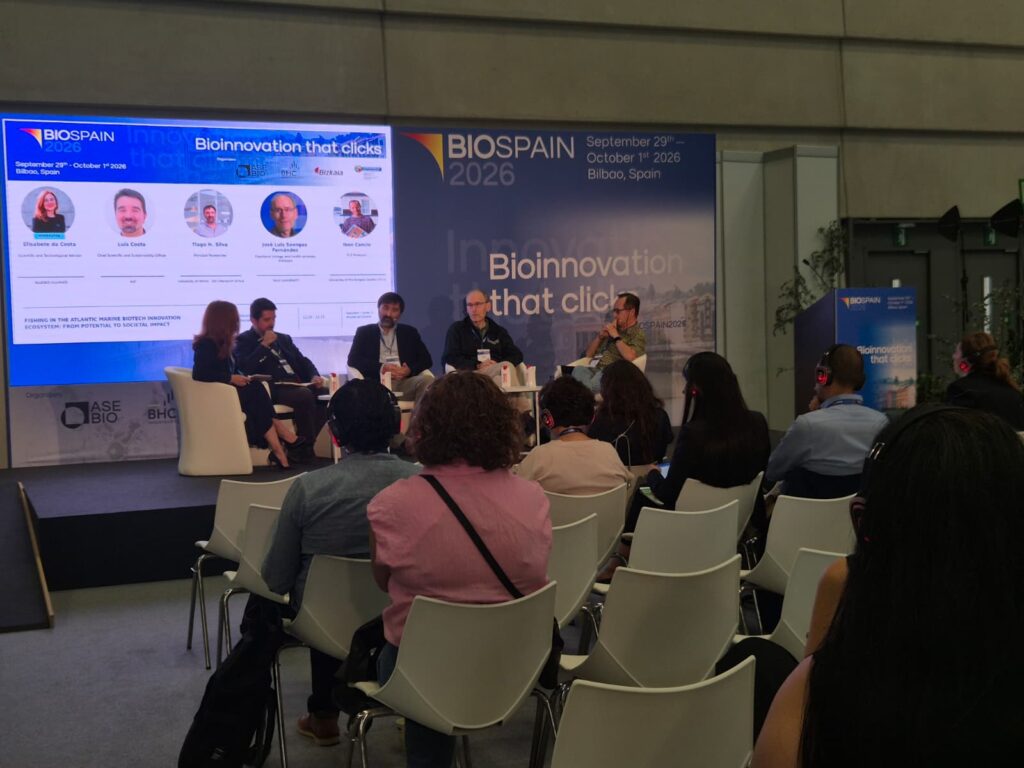
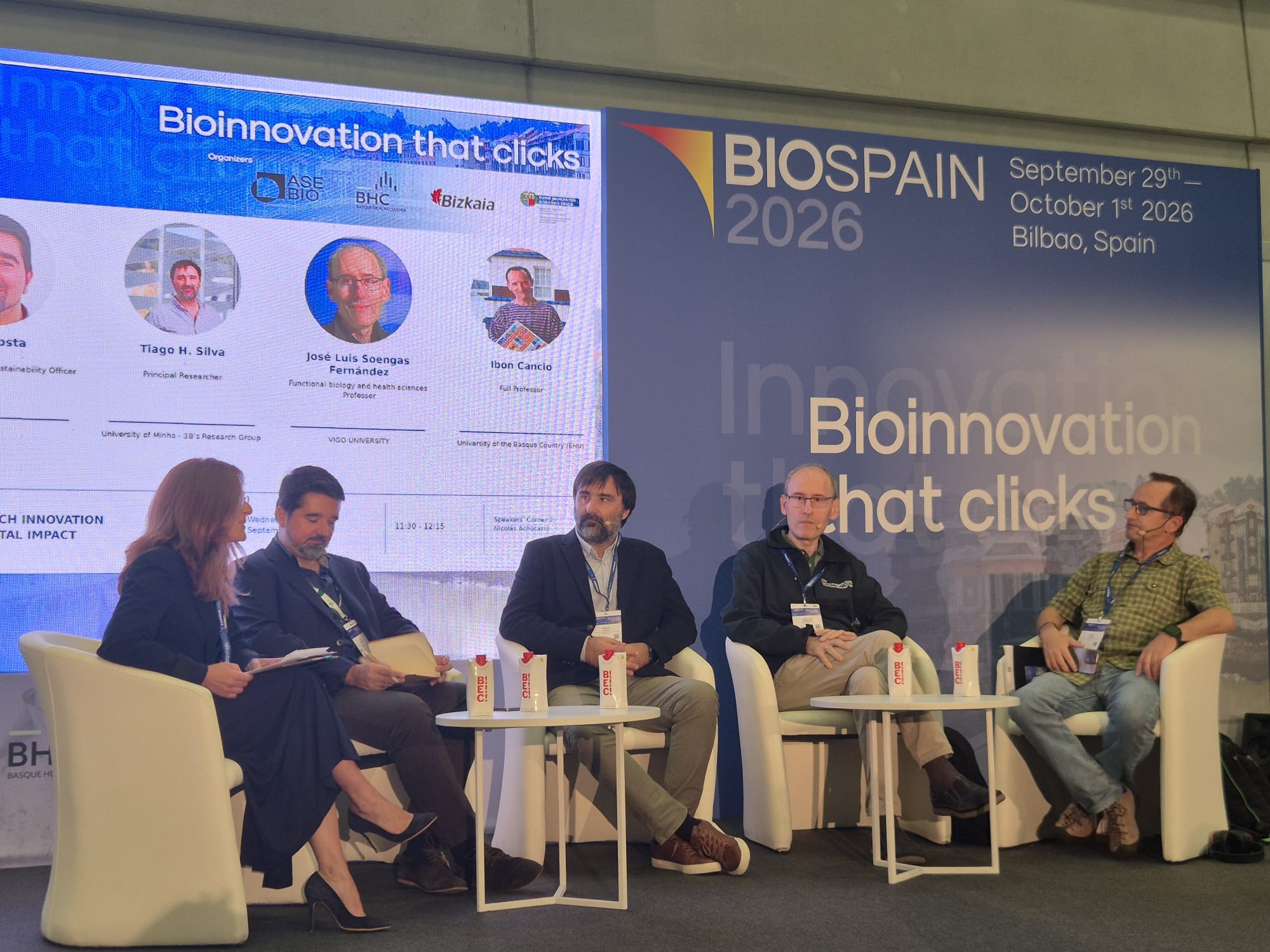
The project proposed the roundtable Fishing in the Atlantic Marine Biotech Innovation Ecosystem: From Potential to Societal Impact, featuring Luis Costa from A4F-Algae Portugal, together with representatives from MARINNONET partner organisations: Tiago H. Silva from the 3B’s Research Group at the University of Minho; José Luis Soengas from the Centro de Investigación Mariña at the Universidade de Vigo; and Ibon Cancio from the Plentzia Marine Station at the University of the Basque Country. Thank you to Elisabete Costa from BlueBioAlliance for preparing and moderating the roundable.
The session explored this challenge from different perspectives across the marine biotechnology ecosystem. Luis Costa, from A4F-Algae Portugal, focused on macroalgae and microalgae and the opportunities offered by both their cultivation and biomass transformation. Their applications range from materials and food to compounds of pharmaceutical interest, alongside their potential within the circular economy and bioremediation to transform effluents from other industries into higher-value products.
Tiago H. Silva addressed a key issue for the project: the gap that still often separates knowledge generated in laboratories from its commercial application. Earlier and closer connections between science and industry can help identify potential commercialisation pathways, guide developments and prevent the responsibility for finding a route to market from falling solely on research teams.
José Luis Soengas brought the discussion into the field of aquaculture and sustainability, from the valorisation of new marine biological resources as sustainable and affordable ingredients for fish feed to issues related to fish welfare, human health and the challenges still facing the sector.
Biodiversity and bioprospecting were at the heart of Ibon Cancio’s contribution. A better understanding of species and ecosystems opens up new opportunities to identify resources with biotechnological potential, while also helping us understand how phenomena such as climate change affect biodiversity and supporting the development of tools related to disease and zoonosis assessment and prevention.
An ecosystem that needs stronger connections
The different perspectives converged around several shared challenges: bringing research and industry closer together, advancing the scalability of developments, making better use of European frameworks supporting biotechnology, and connecting a sector that still operates in a fragmented way across different European maritime regions.
This last issue is directly linked to MARINNONET’s raison d’être. For three years, the network has worked with quadruple-helix actors from Spain, France, Ireland and Portugal to overcome barriers between research and the market and foster new forms of collaboration within the blue biotechnology sector.
MARINNONET is grateful for the opportunity to have been part of BIOSPAIN 2026 and, in particular, to have contributed to bringing the marine perspective into the conversation. The growing presence of Blue & Marine Biotechnology at international events of this scale reflects the opportunities emerging for the sector and the need to continue connecting the Atlantic’s scientific, technological and biological potential with industry and society.